
So, who among us hasn’t found themselves in a bit of a pickle due to ADHD and our incessant dopamine seeking? I certainly have. While I won’t dive into the worst of my experiences here (but if you’re curious, sign up for the email!), I want to share a significant lesson I learned that got me into a world of trouble for quite some time: Temptation Bundling.
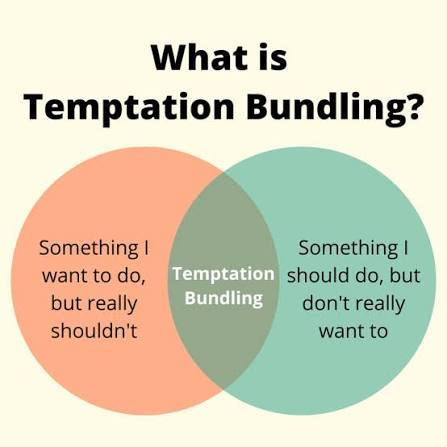
What is Temptation Bundling?
Temptation Bundling is a concept I stumbled upon while listening to a radio program called Freakonomics. This was back in the 2000s when podcasts hadn’t yet taken off. The idea behind temptation bundling is simple: combine activities you dislike with those you love. For example, you might pair workouts or chores with watching your favorite TV show or listening to a podcast. Initially, I was skeptical. Would it really work?

The last guest on the show shared their own temptation bundling tip, saying, “I drink at work.” While I didn’t have that issue, I found my unique way to make it problematic.
My Journey with Temptation Bundling
I started using temptation bundling to motivate myself to work out while binge-watching period dramas. The thrill of watching strong, beautiful women in stunning costumes kept me moving. I also discovered that listening to stand-up comedy made doing dishes more enjoyable, and tackling deep cleaning was far easier with a podcast. However, I must confess: on the rare occasions I engaged in deep cleaning, I sometimes indulged in homemade cannabis edibles that were far too potent because I had no clue what I was doing.

For a while, this was a productive strategy. But then, the smartphone revolution hit, followed by the advent of YouTube. These platforms initially motivated me even more, but eventually, my not-so-adult side emerged. My workouts grew shorter, I began watching two episodes instead of one, and my obsession with YouTube spiraled out of control. (Which did have some benefits. Click below to check out my YouTube channel!)
The Trouble with ADHD and Dopamine Seeking
The trouble my ADHD and dopamine-seeking tendencies led me into was more about time-wasting and exacerbating my disability than anything life-ruining. Yet, this experience is common among many individuals with ADHD. One of the specific things that can really get people in trouble is self medicating. For more on that click here:
Understanding the Link Between ADHD and Dopamine
For decades, psychologists believed that ADHD stemmed from dopamine deficiency. This was especially true given that individuals with ADHD often seek novelty and tend to exhibit low impulse control, driven by a quest for a “dopamine hit.” However, recent research has revealed that people with ADHD may actually overproduce dopamine; they simply have fewer dopamine receptors and transporters in their brains. This understanding is crucial for developing effective management strategies.
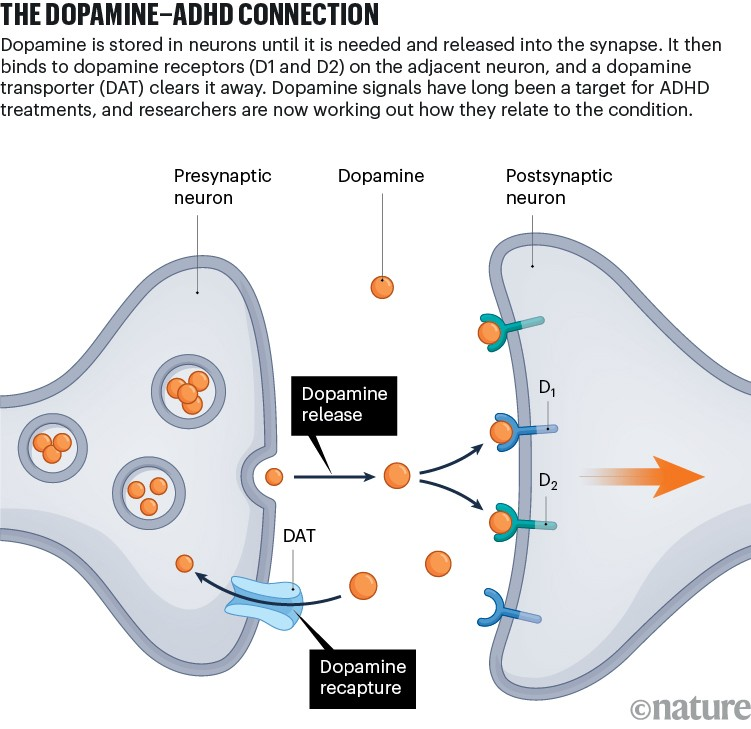
Real-Life Implications of ADHD and Dopamine Dynamics
In practical terms, individuals with typical brain function might find a job well done rewarding enough to motivate them. However, for those of us with ADHD, that “carrot” often fails to serve as a motivator. If ADHD coincides with depression or anxiety, even the “stick” becomes ineffective. Our emotional state frequently hovers in suboptimal territory, making slightly worse conditions feel less daunting. Consequently, low-effort, high-reward activities like video games, doom-scrolling, and thrilling or terrifying movies, can easily become our go-to distractions.

I’m not a horse or a child. I’m an adult with a credit card. I can buy a whole ass birthday cake for no reason. Your carrot is no good here.
Transforming Daily Routines into Engaging Games
Building daily routines can be a Herculean task for many with ADHD. These routines often consist of mundane and repetitive tasks, which can be incredibly challenging to get motivated for. However, there’s a silver lining: we can leverage our dopamine-seeking tendencies to transform these dull tasks into engaging games.
So… do you want to play a game?

Sorry. I don’t know how to make that not sound scary. Anyway…
Introducing a Gamified Routine
Imagine receiving a weekly accountability newsletter that encourages you to focus on your morning or evening routine. Each day, you check in on a website after completing chosen tasks, earning points for each accomplishment. The points system rewards consistent effort, increasing the value of each task as you repeat it. Competing with others adds an extra layer of motivation, with prizes for the highest scorers at the end of the week.
Click here if you’d like to join!
How it Works
Sign up with the above link. You’ll receive a an SMS reminder in the morning or the afternoon (both if you’d like) to log in and report which parts of the challenge you completed that day. Each part of the challenge is worth a different number of points. Each subsequent day you complete the same parts of the challenge, they are worth more points:
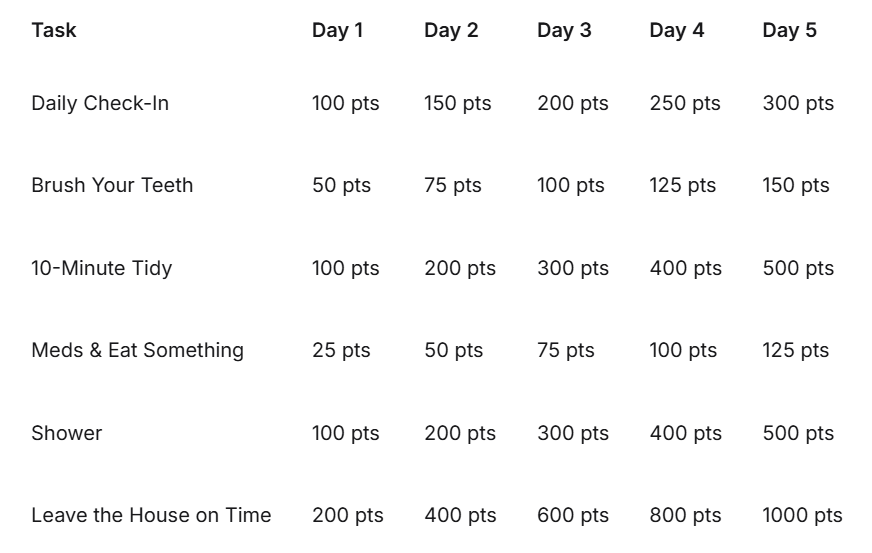
Given our tendency to attempt sweeping changes all at once, leading to burnout, it’s essential to select whether to compete in the morning or evening routine. You’re welcome to complete either list (or work on it) at any time of day. You can’t sign up for both using the same email, so you’ll be dividing your efforts anyway. Here are the points for the evening routine:
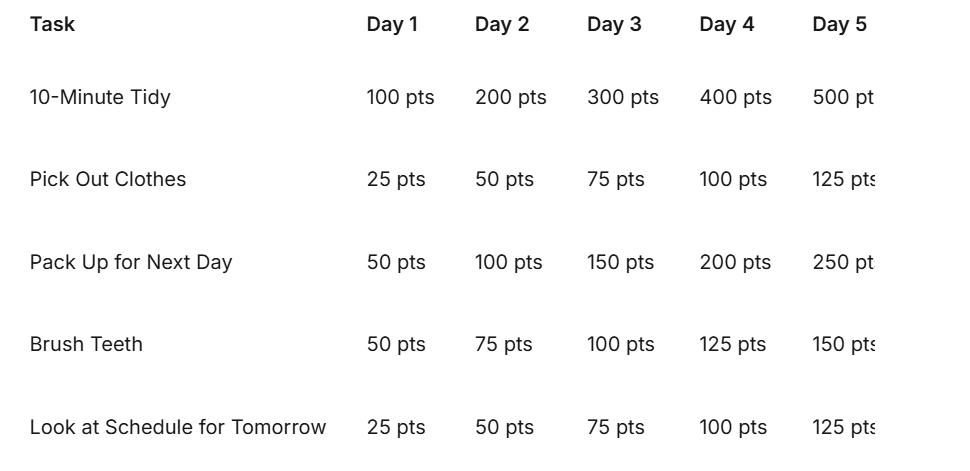
The Rules
This gamified approach is self-reported, so honesty is crucial. A half-hearted attempt every day is far more beneficial than going all out for a few days and then burning out. Remember, the 10-minute tidy means just that—10 minutes. If you feel inspired to clean longer, that’s fantastic, but only the first 10 minutes count.
Eating something in the morning doesn’t require a gourmet meal. It can be as simple as a cheese stick or a piece of chocolate if that’s what it takes to get you moving. The goal is to build sustainable habits.
And at the end of the week the player with the most points will win a free prize from our recommended page!
Final Thoughts
Ultimately, ADHD and dopamine seeking can present numerous challenges, but with the right strategies and a sprinkle of creativity, we can turn these hurdles into manageable tasks. Embrace your journey, experiment with temptation bundling, (but be careful!) Give the game a try. It’s not about thriving or climbing the ladder it’s about surviving and you’ve done a pretty good job of that so far, it’s a great time to do a little bit better.